Tag Archive for: comfort zone

Why Comfort Zone Habits Don’t Achieve Transformational Goals

I learned a hard truth while attempting to self-train for a 1,696-mile bicycle ride: you cannot achieve Transformation Zone goals with Comfort Zone habits.

I wanted to pedal a bicycle to visit the graves of our unit’s six paratroopers who were killed in Afghanistan in 2007, beginning at Chris Pfeifer’s final resting place in Spalding, Nebraska, fifteen years to the day since he died of wounds received in direct combat.

The ride would proceed east through Iowa, Illinois, Indiana, Ohio, Pennsylvania, Maryland, and end at Tom Bostick’s grave in Arlington National Cemetery in Virginia.

I was totally naive about the requirements to be successful and the risks along the way. When I announced the goal to the world, I’d never done a multi-day endurance event. Heck, I didn’t even own a bike and hadn’t ridden a bicycle in over twenty years. 

I had eighteen months to train and figure it all out.

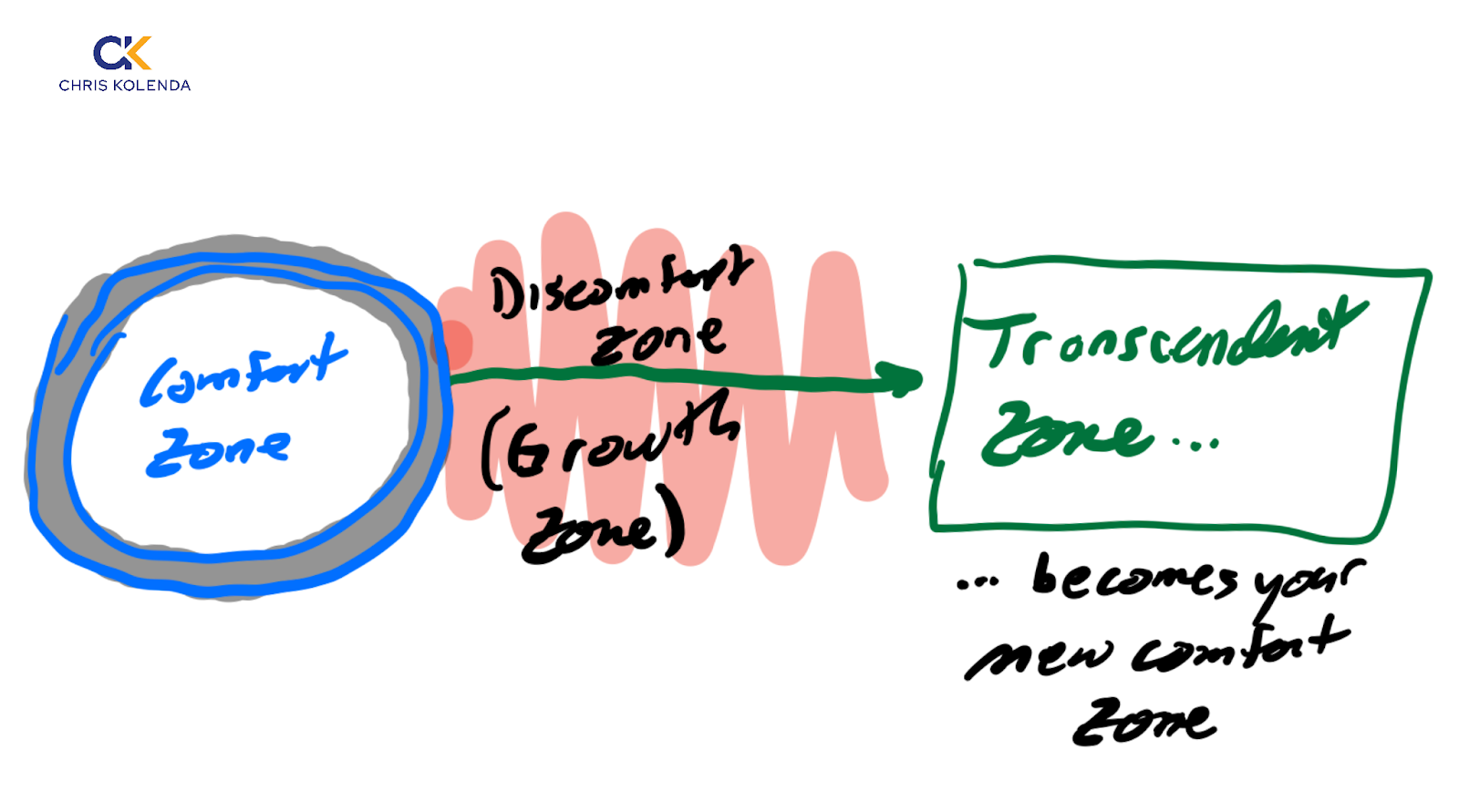
Comfort Zone

After two months of self-inflicted training, I collapsed on my living room floor, in pain and completely “bonking” on my first 25-mile ride. 

“You need professional help,” I told myself, “Or you are going to fall flat on your face.”

I was trying to achieve a Transformation Zone goal using Comfort Zone habits. It was never going to work.

Discomfort Zone

The Discomfort Zone lies between the Comfort and Transformation Zones. It’s full of obstacles and risks that you have no idea how to overcome. It’s where people watch you fall flat on your face. 

The fear of this zone prevents you from acting on transformative goals, unless you are naive like I was.

What if you had a process to get you safely and successfully through the Discomfort Zone?

I discovered that the activation agent you need consists of three elements:

  1. Capability: Building new capacity to face unprecedented challenges requires the curiosity and willingness to build new skills and the accountability to turn those new skills into durable habits. 
  2. Community: True breakout into transformation is never a solo ride. You need the right people around you who have your back and support your growth, while pruning away influences that drain or discourage you. 
  3. Commitment: Success is never a straight line. It’s filled with faceplants and setbacks. How you handle these determines whether you bounce forward or just bounce around. The courage to transform setbacks into stepping stones for success requires you to feel, think, and act in new ways, or your future will be just like your past.

When you get all three working together, you gain the Conviction to turn the Discomfort Zone into the Growth Zone.

Visual on comfort zone habits and transformational goals.

Transformation Zone

The beauty of reaching the Transformation Zone is that you begin to recognize even greater possibilities beyond.

The Fallen Hero Honor Ride raised enough money for us to start the Saber Six Foundation, a 501(c)(3) nonprofit organization that works with veterans who want to turn post-combat stress into growth. We’re already impacting the lives of hundreds of veterans.

Steering with Conviction: How 1,700 Miles on a Bike Revealed the Blueprint for Enduring Success is my most popular program for leaders who want to break out of comfort zones and achieve transformational goals.

If this program sounds interesting to you, let’s schedule a call to see if it’s a good fit.
Is it time to dismantle your DEI and ERG programs

Are your DEI and ERG programs serving their purpose, or is it time for a radical reevaluation?

How to turn discomfort into growth.

Valuing Discomfort 

One of the most transformative experiences of my professional life was attending graduate school at the University of Wisconsin as a U.S. Army captain before teaching at West Point. As the only active-duty officer in the student body, I was immersed in a very different environment than I’d experienced in the past. 

I grew up in a conservative household, attended West Point, and served in the mostly conservative military. Madison’s liberal faculty and student body took me outside my comfort zone, and initially, I felt like a fish out of water. 

One professor remarked, “We don’t teach military history,” as if I could not study anything else. 

Stepping out of my comfort zone, I found myself among people who engaged in agreeable disagreements on various topics. This experience of embracing viewpoint diversity expanded my intellectual horizons and challenged me to reevaluate ideas I had previously held without much thought. 

Along the way, I developed the ability to listen without judgment to someone’s point of view and ask open-ended questions that helped me understand where they were coming from. 

Doing so develops your empathy skills, which, years later, helped our unit motivate a large insurgent group in Afghanistan to stop fighting and become allies. 

Those skills proved vital when I participated in unofficial meetings with Taliban representatives in 2017-8, resulting in the group writing an open letter to the American people requesting peace talks.

I wonder how differently I would have developed had I accepted loads of unsolicited career advice to avoid teaching at West Point and do what everyone else was doing.  

Taking off the Body Armor

I worry about the trend where people seek safety by bubble-wrapping themselves in their comfort zones. 

Like attracts like, and people naturally gravitate toward others who look, think, and act like them, creating comfort zones that can become exclusionary, even hostile, echo chambers.

Listening to new ideas and ones you disagree with takes courage; screaming at people from inside your comfort zone does not. 

Building bridges with people who look, act, and think differently than you do takes courage; fortifying your bubble wrap does not.

Joey Hutto, a captain during our 2007-8 deployment to Afghanistan, exemplified courage when he accepted a dinner invitation from village elders who’d been supporting the insurgents. Joey removed his helmet and body armor, handed his weapons over to his patrol, and walked with his interpreter into the home.

We were new to the area. The elders told Joey why ninety-five percent of the people were fighting us: years of civilian casualties and government corruption convinced them that the insurgents were the lesser of two evils. 

Joey listened to their point of view and asked follow-up questions so they knew he understood their message. “We cannot change the past,” he said. “But we can find ways to fix these problems and work together for a better future.” 

And they did.

Transcending Comfort

Strengthening your self-awareness and committing to growth are a good places to start if you want to become an ever-better version of yourself.

Knowing yourself, learning how others see you, and understanding what others need from you helps you approach people and situations with an open mind. This allows you to combat comfort zones that limit your exposure to new ideas and experiences. 

Chris Kolenda: Is it time to dismantle your DEI and ERG programs

Self-aware people recognize that growth requires entering their discomfort zones. Having guides (mentors, coaches, advisers, friends, etc.) to help you through vulnerability turns your discomfort into your growth zone. 

That successful journey leads to your transcendent zone, creating a new comfort zone for growing beyond.

Are you transcending or entrenching your comfort zone? 

  • When was the last time someone disagreed with you? 
  • How did you respond?

If your direct reports do not flag problems, offer new ideas, and try new things several times per week, you’re probably sending signals that you don’t brook disagreement. 


Employees may believe you lack of curiosity, react poorly when someone disagrees with you, or punish those who take a risk and fall short. Either way, people will self-censor, and you and your company won’t grow to new heights.

What discomfort zone are you entering next? Email me to let me know.