Tag Archive for: Turnover

Regrettable Versus Unregrettable Turnover

Struggling with turnover? Here’s how to build a workplace where people want to stay.

Some employees are not the right fit for your company. This turnover is unregrettable, and letting them go can be addition by subtraction. Regrettable turnover, however, includes high-performing employees who vote with their feet. Differentiating the turnover is vital because you address the problems differently. 

Unregrettable turnover means you have a hiring problem. You need to improve your process to identify and attract right-fit prospects who will buy into your culture and grow with your company.

Regrettable turnover may indicate leadership or culture problems. Do people feel like they are growing and developing or stagnating? Do they feel out of place in your company? Are their leaders inspiring them to contribute their best?

Avoid Managing the Metrics

You should pay careful attention to turnover, but beware of the perverse incentives. Evaluating your managers on turnover could lead them to manage the metrics. They may seek to reduce unregrettable turnover by not enforcing standards, for example, which leads to more wrong-fit employees and more significant frustration for your high performers.

Example: Salesforce’s Focus on Employee Growth to Reduce Regrettable Turnover

Salesforce, a global leader in customer relationship management (CRM) software, faced challenges with regrettable turnover among its top performers in the competitive tech industry. To address this, the company implemented a comprehensive employee development strategy centered around two key elements:

  1. Customized Career Development Plans: Salesforce introduced personalized career paths tailored to each employee’s goals and strengths. They created opportunities for growth within the company, including structured internal mobility programs to allow high-performing employees to transition into new roles that matched their aspirations.
  2. Leadership Coaching and Feedback: Recognizing that leadership quality was a critical factor in regrettable turnover, Salesforce invested heavily in training its managers to provide better coaching and feedback. Leaders held regular one-on-one meetings to ensure employees felt valued, challenged, and supported in their growth.

Results:

  • A reduction in regrettable turnover, particularly among high-performing employees who previously felt stagnant or underappreciated.
  • Increased employee engagement scores, reflecting a stronger sense of belonging and opportunity within the company.
  • Retention of institutional knowledge, ensuring Salesforce could continue delivering value without the costly disruptions of high turnover.

This example illustrates how investing in leadership development and personalized growth opportunities can directly combat the root causes of regrettable turnover while fostering a culture where top talent thrives.

Creating an Employee Development Strategy

Create an employee development strategy by designing a double-axis chart with short-term and long-term on the horizontal axis and tangible and intangible on the vertical axis. This chart helps you identify both the tangible benefits, like pay and perks, and intangible benefits, like career growth, purpose, and a positive work environment. People are drawn to workplaces where they align with the values and see clear paths for personal and professional growth. When you compete on culture and development rather than focusing solely on short-term tangibles, you create a workplace that retains top talent and inspires excellence.

Building an Inspiring Culture

During my February 12 masterclass, Building an Inspiring Culture, I’ll discuss how to fit this tool within your culture strategy so you decrease both regrettable and unregrettable turnover while boosting your profitability. 

Register by February 9, and you’ll get lifetime access to my signature online, video-based program, Building an Inspiring Culture, which gives you the step-by-step processes to create a culture that advances your goals and evolves and grows with your company.

Everyone who registers gets the video recording, so don’t worry if you have a conflict on February 12.
Your Culture Doesn’t Eat Anything for Breakfast

The saying, “Culture eats strategy for breakfast,” attributed to Peter Drucker, suggests culture is your top priority. 

You know culture is important to cultivate, but where should it rank among your priorities in leading your organization and strengthening its purpose and direction? 

I love taking on popular nonsense, and this one needs addressing. 

Culture doesn’t eat breakfast, and it certainly doesn’t eat strategy.

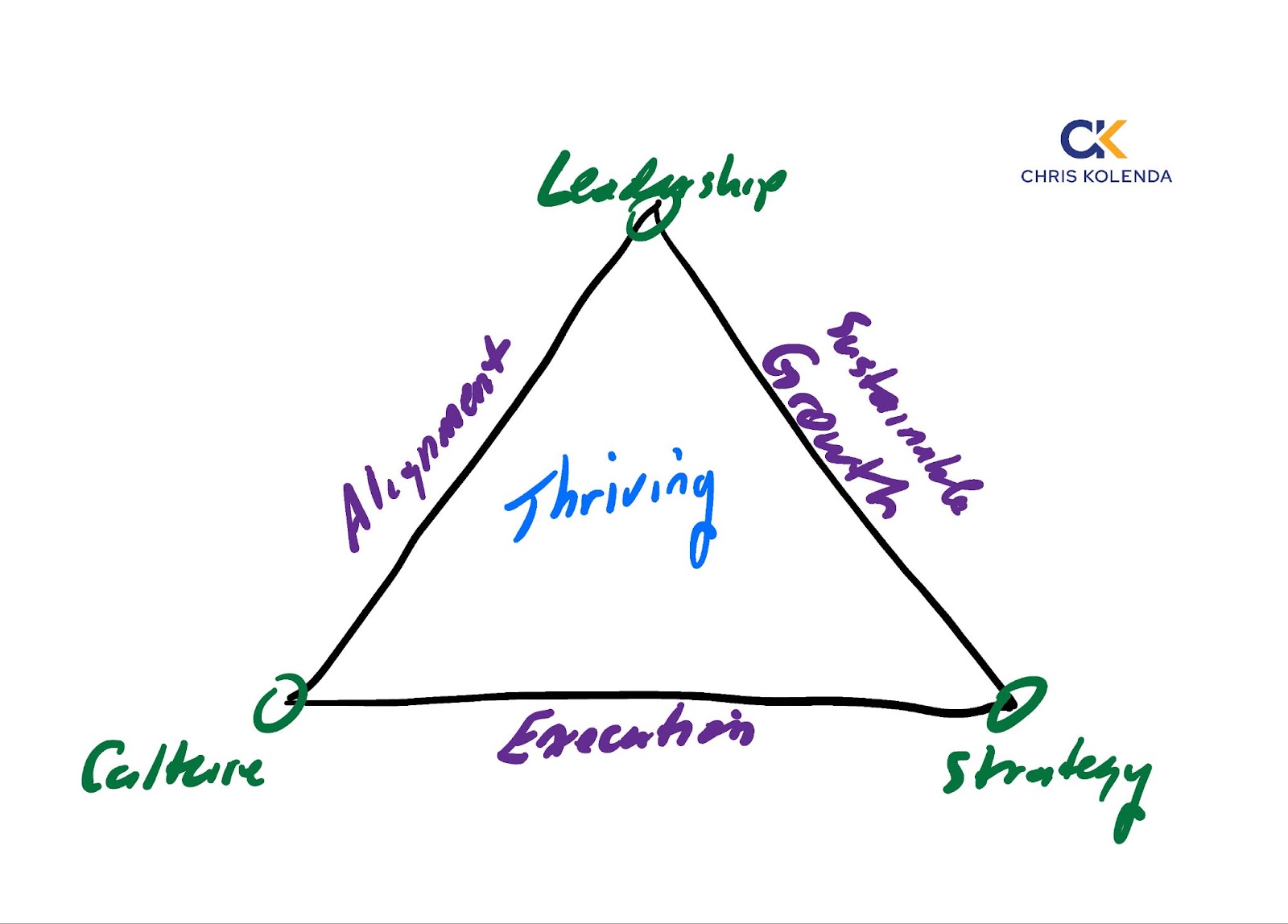
Culture and Strategy are peers alongside Leadership, and you need all three working together to succeed.

These factors are interdependent and create a framework that supports growth, resilience, and competitive advantage. 

Leadership is the driving force behind an organization’s mission and objectives. It influences the strategic direction, sets the tone for culture, and motivates employees to perform at their best.

Apple’s Steve Jobs’ clear vision was critical in driving innovation and maintaining a competitive edge.

At Wells Fargo, the creation of fake customer accounts by employees was a direct result of toxic leadership behavior that prioritized sales targets over ethical behavior, leading to widespread dissatisfaction and demotivation.

Uber experienced high turnover rates and public scandals, which highlighted a failure to address workplace harassment and discrimination.

Culture embodies the values, norms, and practices that dictate how employees interact and work together. A positive culture fosters engagement, loyalty, and productivity, ensuring the collaborative pursuit of strategic goals.

Google’s emphasis on innovation and employee well-being has enabled it to attract top talent, drive continuous innovation, and maintain high employee satisfaction.

Enron collapsed from a culture of secrecy and poor internal communication, where unethical practices were hidden from employees and stakeholders.

Blockbuster’s resistance to change and innovation prevented it from adapting to the digital streaming revolution, resulting in its downfall.

The strategy involves setting the organization’s purpose and direction and inspiring plans to achieve them so you can navigate the competitive landscape and adapt to market changes.

Amazon’s strategic focus on customer obsession, operational efficiency, and innovation has allowed it to expand rapidly and dominate various markets.

Toys “R” Us failed to address the rise of e-commerce and changing consumer preferences.

Xerox invested heavily in its PARC research center without effectively commercializing the innovations, which led to missed opportunities in the technology market.

Each element—leadership, culture, and strategy—plays a unique and essential role in an organization’s success. The absence of any one of these factors can lead to specific challenges, even if the other two elements are strong. Recognizing these indicators can help organizations identify and address their weaknesses, ensuring a more balanced and effective approach to achieving their goals.

Here’s how you can identify when one of these elements is missing.

Stagnation indicates inadequate leadership. Employees may feel directionless despite having a supportive culture and clear strategies. There is no one to inspire them toward achieving strategic goals, and no one makes bold decisions, resulting in missed opportunities.

Low Morale and High Turnover suggest you need to strengthen your culture. Even with strong leadership and a clear strategy, a toxic or weak culture can lead to employee dissatisfaction and disengagement. People will vote with their feet, and those who remain struggle with execution and performance.

A lack of focus and direction indicates that strategy is missing. Despite having inspiring leaders and a positive culture, the organization may struggle with setting and achieving long-term goals, resulting in drift, confusion, and waste.

Here’s what happens when you have all three working together. 

  • Alignment: Leadership ensures that the strategy supports the organization’s vision and that the culture advances strategic initiatives.
  • Execution: Culture drives how strategy is executed. A positive culture promotes collaboration, innovation, and commitment, which are vital for successful strategy implementation.
  • Sustainable Growth: Leadership and culture together ensure that strategic initiatives are sustainable over the long term, adapting to changes and overcoming challenges effectively.

An organization needs strong leadership to set a vision and inspire action, a positive culture to create a supportive and engaging work environment, and a clear strategy to provide direction and prioritize efforts. The absence of any one of these elements weakens the whole structure, making it difficult to achieve and sustain success. The interplay among leadership, culture, and strategy creates a synergistic effect that drives performance and ensures long-term viability.